Saying Kaddish for a Parent: The Eleven Months Explained
For a son who has lost a father or mother, saying Kaddish becomes part of every day of the year that follows. Three times a day, with a minyan, he rises and leads the congregation in sanctifying Hashem’s Name. It is one of the most familiar Jewish mourning practices, and one of the most misunderstood.
What the Kaddish Says
The Mourner’s Kaddish (Kaddish Yatom) does not mention death at all. It is a declaration of praise: “May His great Name be exalted and sanctified.” The congregation responds Amen, yehei shmei rabba mevarach — “May His great Name be blessed forever.” When a mourner, at the moment of his loss, publicly sanctifies Hashem’s Name and leads others to answer, it brings great merit and elevation to the soul of the parent who raised him.
Why a Minyan Is Required
Kaddish is a davar shebikdusha, a matter of holiness, and like Kedusha and Barchu it may only be said in the presence of a minyan of ten men. This is why a mourner organizes his day around minyanim, and why Kaddish at a grave also requires ten men to be present.
Why Eleven Months and Not Twelve
The year of mourning for a parent lasts twelve months, but the widespread custom, recorded by the Rema, is to say Kaddish for only eleven. The reason given is that the judgment of the soul is said to last up to twelve months only for the wicked; stopping after eleven months expresses that we do not regard our parent that way. There are different customs about how to count the eleven months and on which day to stop, so ask your rav for the exact date.
When Kaddish Is Said
- After Aleinu at the end of Shacharit, Mincha and Maariv
- After certain chapters of Tehillim in the morning prayers
- Kaddish D’Rabbanan after learning Torah, such as after a passage of Mishnah or Gemara
- At the grave, together with Tehillim and El Malei Rachamim
- Every year again on the yahrzeit
Many mourners also lead the prayers as chazzan during the year, which is considered an even greater merit than Kaddish alone.
When a Son Cannot Say Kaddish
When there is no son, or a son is unable to attend a minyan regularly, it is a long-standing practice to arrange for another person — often a Torah scholar — to say Kaddish on behalf of the departed. Families should ask their rav about the right arrangement for their situation.
More Ways to Bring Merit to the Soul
- Learning Mishnayot l’ilui nishmat, by the letters of the name
- Giving tzedakah in the parent’s merit
- Visiting the grave on the shloshim and the yahrzeit, with Tehillim and Kaddish
- Dedicating a full day of Torah learning in a Jerusalem Kollel
When the Grave Is in Jerusalem and You Are Not
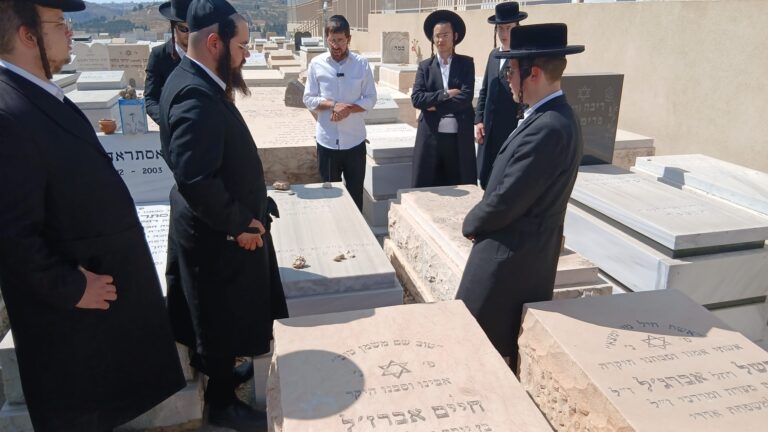
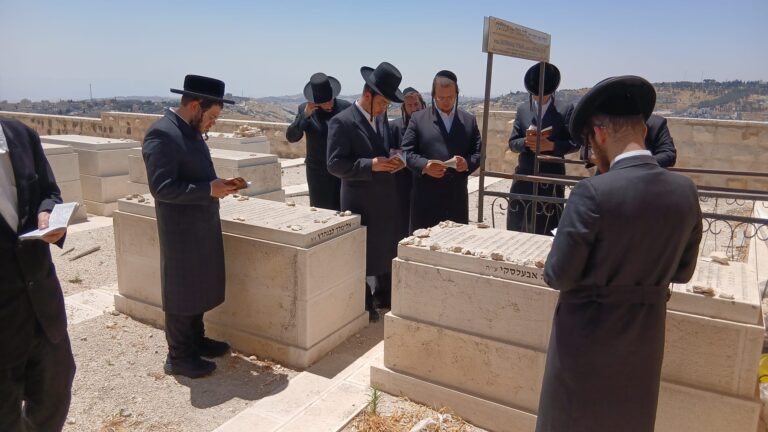
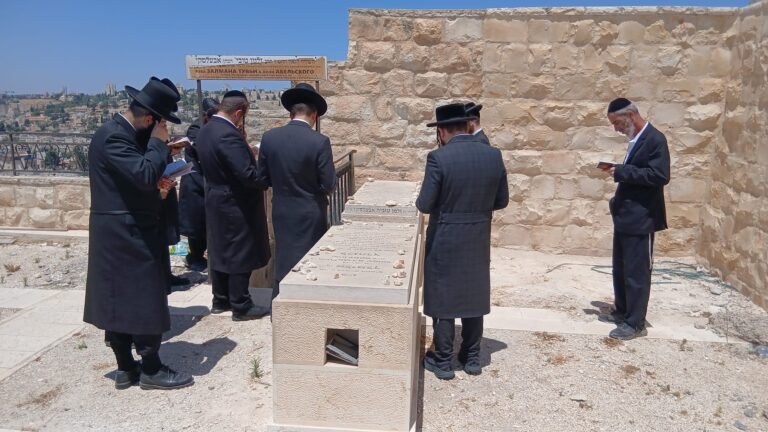
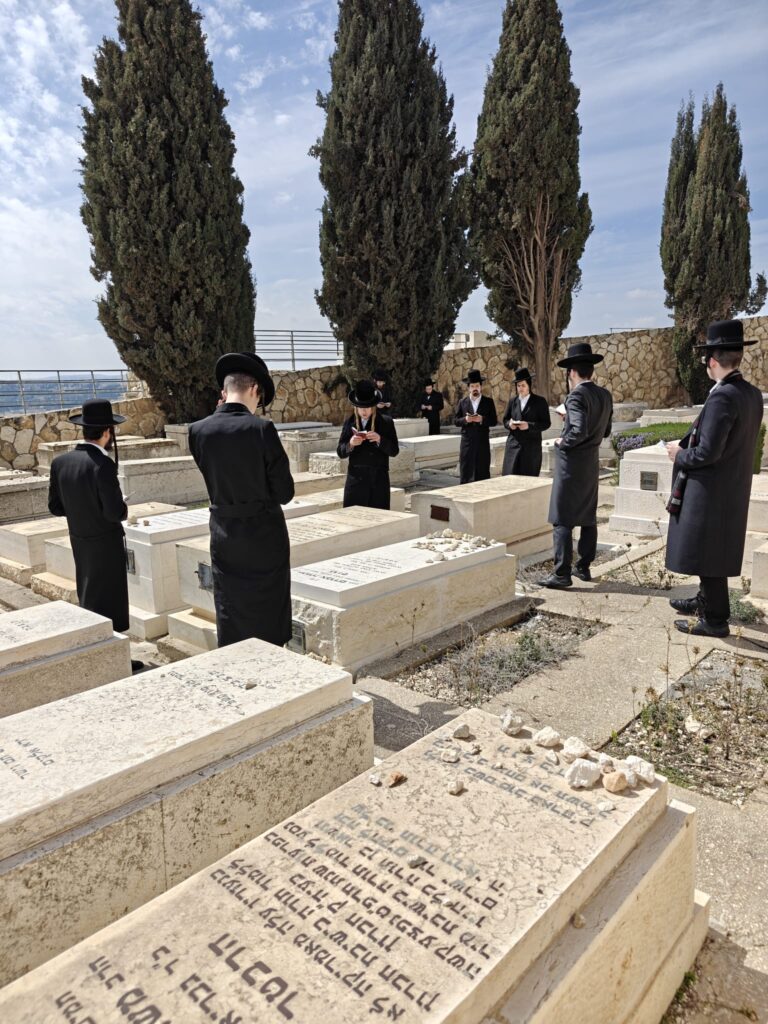
Many sons say Kaddish faithfully in their own shul in New York, London or Melbourne while their parent is buried on Har HaMenuchot or Har HaZeitim. On the shloshim and the yahrzeit, a minyan of yeshiva students can stand at the grave itself and say Tehillim, Kaddish and El Malei Rachamim, so the kever is not left alone on those days.
Arrange a Minyan at the Grave
If you live abroad and cannot be in Jerusalem, our team of yeshiva students can be there for you: a full minyan at the grave, Tehillim by the letters of the name, Kaddish and El Malei Rachamim, with photos and video sent to you on WhatsApp. See our services or message us on WhatsApp to arrange a visit.