Shloshim: Marking the Thirty Days with a Visit to the Grave
After the seven days of shiva, Jewish mourning continues through the shloshim — the first thirty days counted from the day of burial. For most relatives, many mourning practices end with the shloshim; for a parent, some practices continue through twelve months, and Kaddish is said for eleven months.
Practices During the Shloshim
During these thirty days mourners refrain from celebrations and festive gatherings, from listening to music, from haircuts and shaving, and from wearing new clothes. The details and their exceptions are discussed at length in the halachic literature; ask your rav about your situation.
Marking the End of the Shloshim
In Israel it is very common to hold an azkara — a memorial gathering — at the grave at the end of the shloshim. Family and friends come to the cemetery, say Tehillim and Kaddish, and hear words of remembrance and Torah. Many families also hold a siyum, completing a masechet of Mishnah or Gemara that was divided among relatives and friends during the thirty days (see Mishnayot l’ilui nishmat).
In many Jerusalem families the headstone is set at the end of the shloshim, so the azkara and the unveiling take place together.
The Order at the Grave
- Chapters of Tehillim, and Psalm 119 by the letters of the name and the word neshama
- Words of remembrance
- Kaddish (with a minyan)
- El Malei Rachamim
When the Family Has Flown Home
A common situation: a parent passes away in Israel or is brought to Jerusalem for burial, the family sits shiva, and then the children must return to their homes and jobs abroad before the shloshim ends. They can say Kaddish in their home shul, but no one from the family will be at the grave on the thirtieth day.
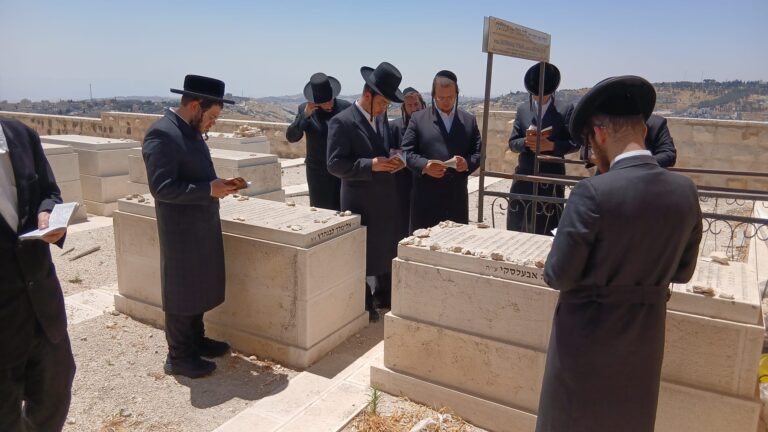
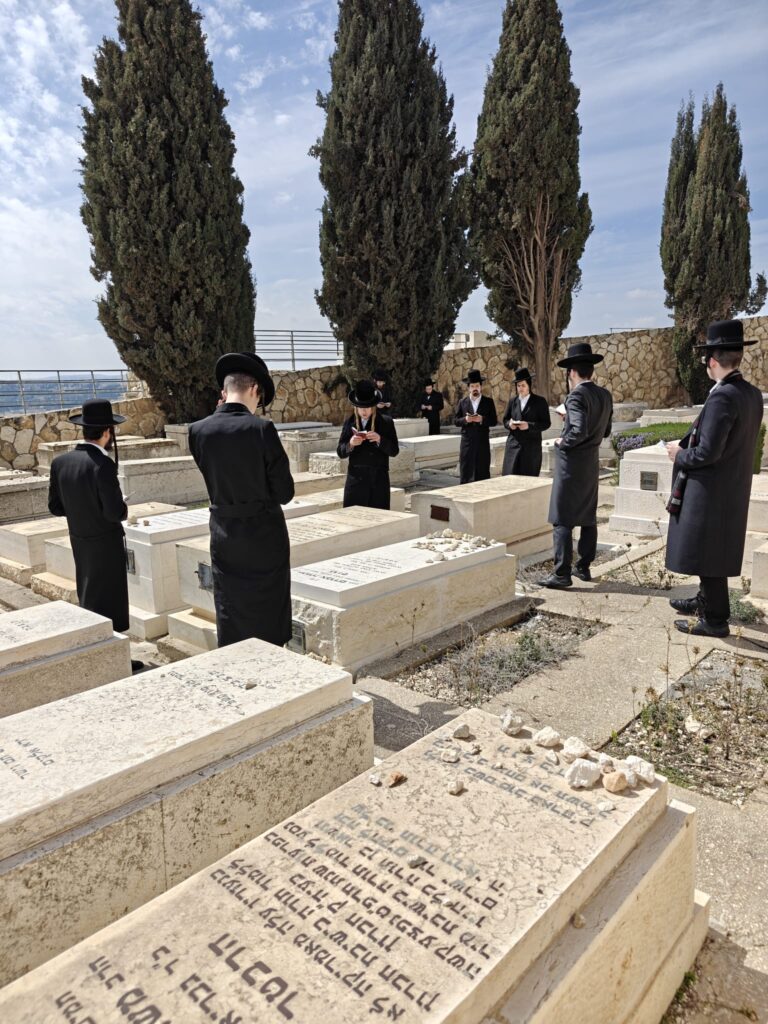
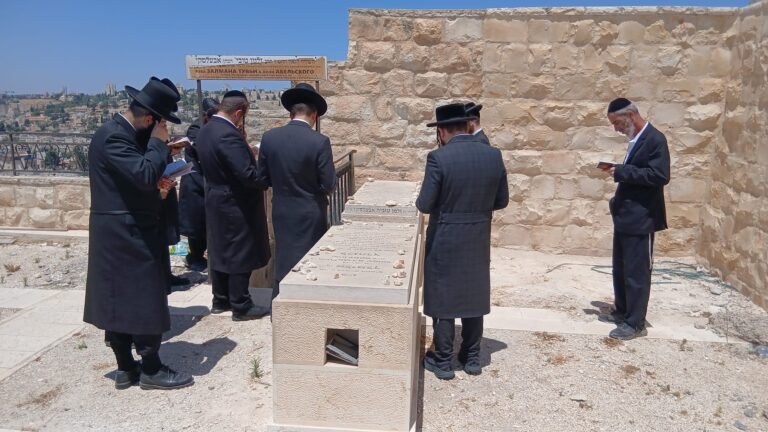
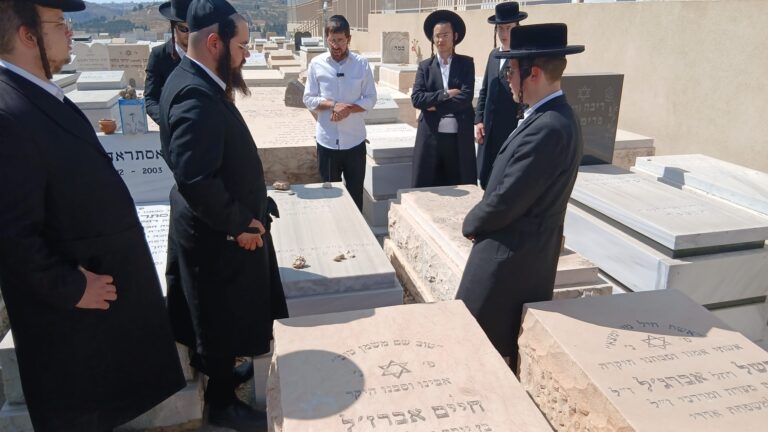
In that case, a minyan of yeshiva students can hold the azkara at the grave on the right day, say Tehillim by the name, Kaddish and El Malei Rachamim, light a candle, and send photos and video on WhatsApp. Families also use this to make sure the eleven months and the first yahrzeit are covered at the kever.
Arrange a Minyan at the Grave
If you live abroad and cannot be in Jerusalem, our team of yeshiva students can be there for you: a full minyan at the grave, Tehillim by the letters of the name, Kaddish and El Malei Rachamim, with photos and video sent to you on WhatsApp. See our services or message us on WhatsApp to arrange a visit.