Mishnayot L’ilui Nishmat: Why We Learn Mishnah for the Departed
Among the oldest and most widespread customs for honoring someone who has passed away is learning Mishnayot for the elevation of their soul — l’ilui nishmat. From the days of shiva through the first year, and on every yahrzeit, families and friends divide up chapters of Mishnah and learn them in the merit of the departed.
Mishnah and Neshama: The Same Letters
The custom is often explained with a simple observation: the Hebrew word משנה (Mishnah) is made of the same letters as נשמה (neshama, soul). Torah learning is the greatest merit a person can bring, and learning done on behalf of the departed is understood to bring them elevation in the World to Come — something they can no longer achieve on their own.
Learning by the Letters of the Name
A common practice is to learn chapters of Mishnah whose first words begin with the letters of the Hebrew name of the departed, in order. For example, for someone named Moshe (משה), one would learn a chapter beginning with מ, then ש, then ה. Many also add the father’s name.
After the name, it is customary to learn the mishnayot whose opening letters spell the word נשמה. Many have the custom to learn the seventh chapter of Masechet Mikvaot for this purpose, since its mishnayot begin with these letters.
This parallels the custom of reciting the verses of Tehillim 119 by the letters of the name at the grave — you can generate that reading with our free Tehillim by Name tool.
When Mishnayot Are Learned
- During the seven days of shiva, often in the house of mourning
- Through the shloshim and the first eleven months
- On the yahrzeit, often together with a visit to the grave
- Many families organize a full siyum of the Six Orders of Mishnah within the first year, dividing the masechtot among relatives and friends
Who Should Learn?
Ideally, children and family members learn themselves; there is special merit when a son learns for a parent. But many families do not have the time or background to learn Mishnah in Hebrew and Aramaic with proper understanding. In that case, it is a long-standing practice to ask Torah scholars to learn on the family’s behalf, while the family supports that learning. The merit of the learning, and of supporting it, is dedicated to the soul of the departed.
Adding Mishnayot to a Graveside Visit
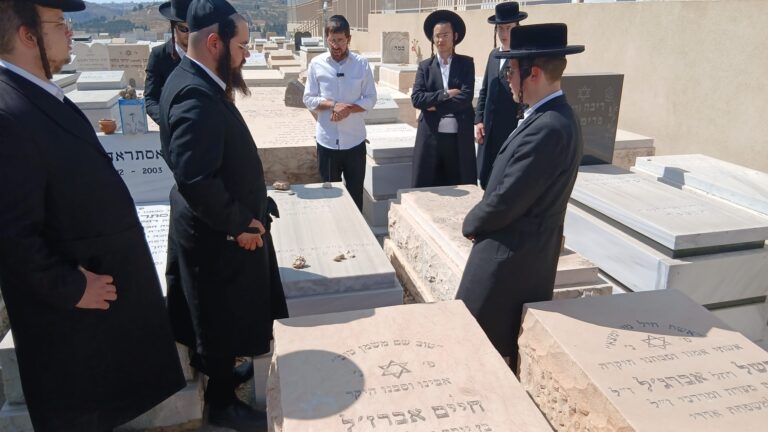
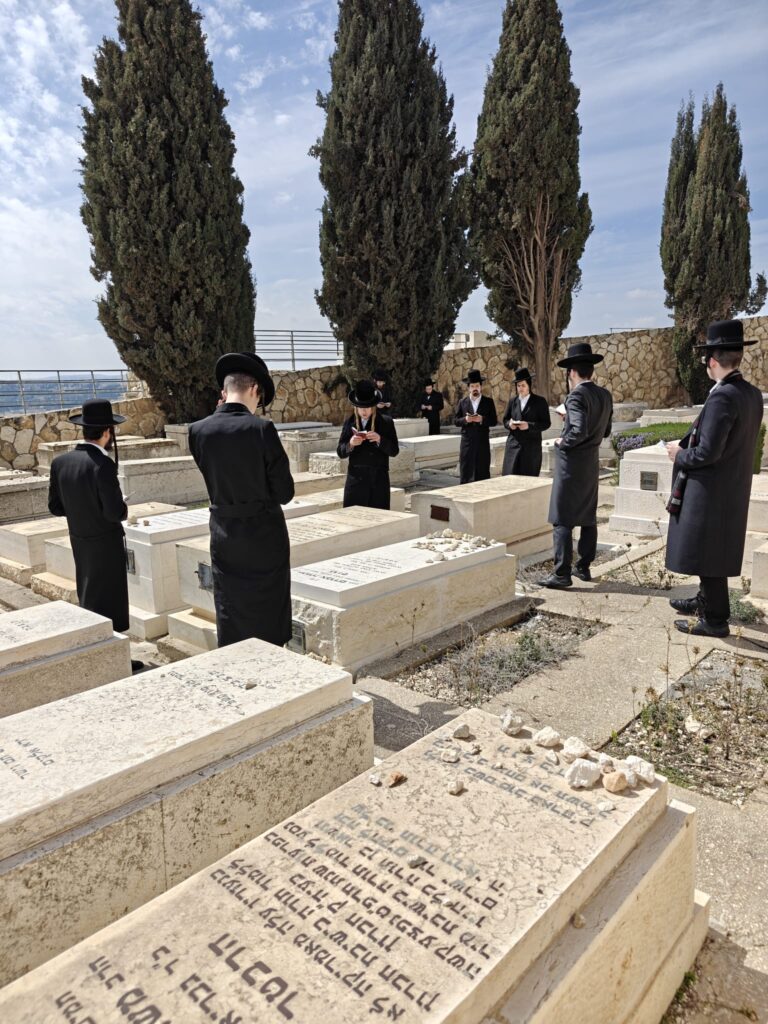
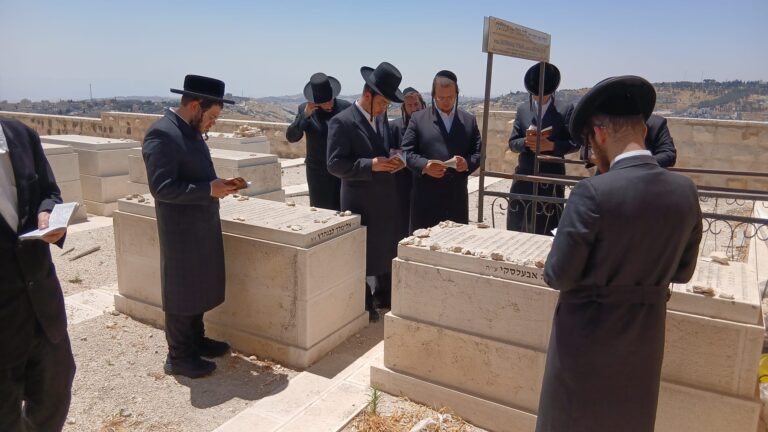
When our minyan visits a grave in Jerusalem on a yahrzeit, families often ask that Mishnayot be learned by the letters of the name, either at the kever or in the beit midrash on the same day. Combined with Tehillim at the grave, Kaddish and El Malei Rachamim, it gives the day a complete and meaningful structure. For a larger merit, some families dedicate a full day of Kollel learning in Jerusalem.
What to Send Us
To arrange learning by the name, please send the full Hebrew name of the departed, the Hebrew name of their father, and the date of the yahrzeit. If you are unsure of the Hebrew date, see how to find the yahrzeit date.
Arrange a Minyan at the Grave
If you live abroad and cannot be in Jerusalem, our team of yeshiva students can be there for you: a full minyan at the grave, Tehillim by the letters of the name, Kaddish and El Malei Rachamim, with photos and video sent to you on WhatsApp. See our services or message us on WhatsApp to arrange a visit.