The First Yahrzeit: Customs, Date and How to Mark It from Abroad
The first yahrzeit marks a full year since a loved one passed away. For the family, it closes the year of mourning and opens a lifelong practice: every year, on the same Hebrew date, the soul is remembered with Kaddish, Torah, tzedakah and, where possible, a visit to the grave.
Which Date Is the First Yahrzeit?
The yahrzeit is kept on the Hebrew date of the passing, not the secular date. If the passing was after sunset, the Hebrew date is the following day. Our guide on how to find the yahrzeit date explains how to check this, including what to do in a leap year with two months of Adar.
There is a well-known custom regarding the first year only: when the burial took place three or more days after the passing, some observe the first yahrzeit on the date of burial, and from the second year onward on the date of passing. Most families who buried on the day of passing or the next day keep the date of passing from the start. Because practice varies, ask your rav which date your family should keep.
Kaddish and the Eleven Months
A son recites Kaddish for a parent for eleven months, not twelve, and then stops before the year is complete. On the first yahrzeit, Kaddish is said again — at Maariv the night before, and at Shacharit and Mincha on the day. Where possible, the mourner also leads the prayers (davening for the amud).
Customs of the Day
- Yahrzeit candle: a candle that burns for about 24 hours is lit at nightfall at the start of the day
- Aliyah: in many Ashkenazi communities, the son receives an aliyah on the Shabbat before the yahrzeit, sometimes followed by El Malei Rachamim
- Torah learning: learning Mishnayot l’ilui nishmat, often completing a siyum
- Tzedakah: giving charity in the merit of the departed
- A tikkun: some provide refreshments after Shacharit so that others make brachot l’ilui nishmat
- Some have a custom to fast on a parent’s yahrzeit; ask your rav whether this applies to you
Visiting the Grave
It is customary to visit the grave on the yahrzeit and say Tehillim, Kaddish and El Malei Rachamim. On the first yahrzeit this visit has particular weight, and in many families it is also the occasion of the unveiling of the headstone if it was not done earlier.
If You Live Abroad
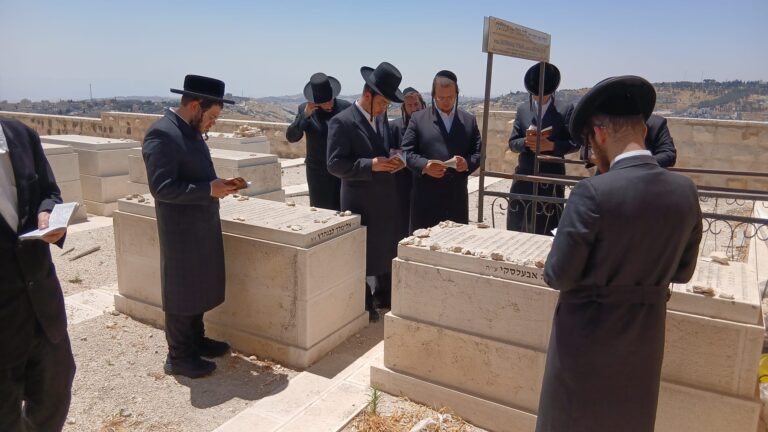
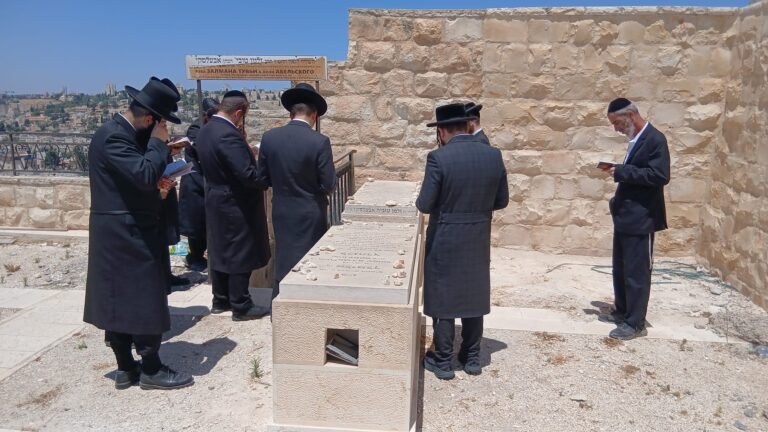
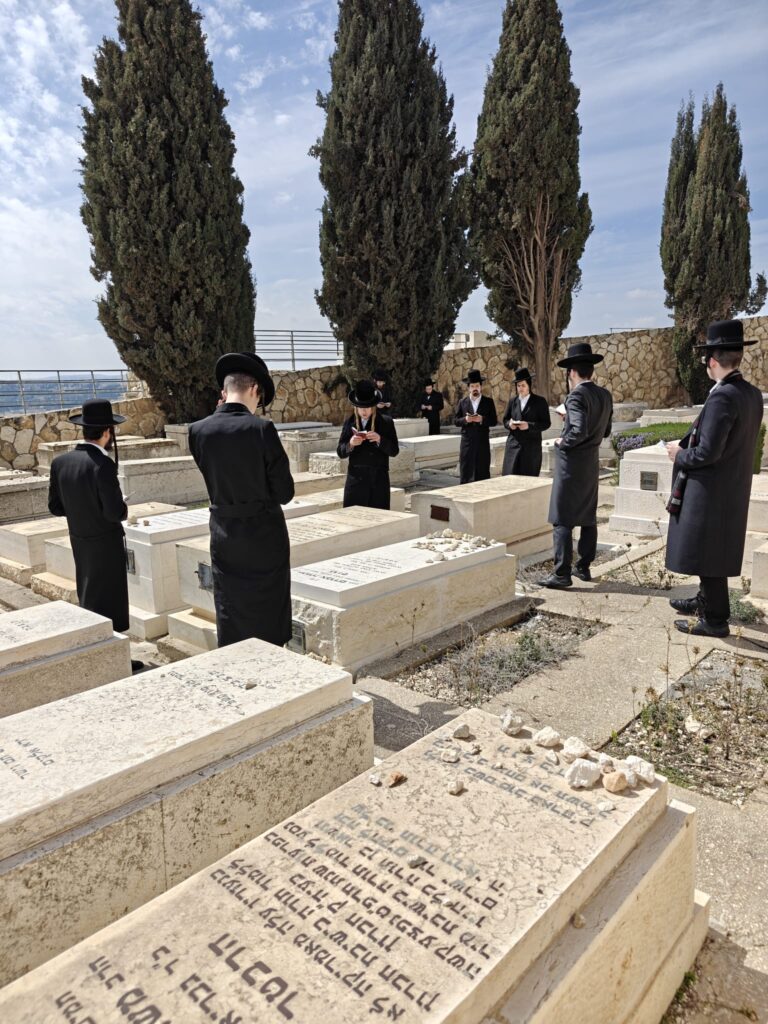
For families whose parents or grandparents are buried in Jerusalem — on Har HaMenuchot, Har HaZeitim or Sanhedria — flying in for the first yahrzeit is not always possible. You can still say Kaddish in your own shul, and arrange for a minyan to stand at the grave in Jerusalem on the same day.
Our minyan of yeshiva students goes to the kever on the correct date, recites Tehillim by the letters of the name, Kaddish and El Malei Rachamim, lights a candle, and sends you photos and video on WhatsApp so you can be part of it from wherever you are. See what happens on a visit.
A Simple Checklist
- Confirm the Hebrew date (and whether it is the date of passing or burial for this first year)
- Arrange Kaddish and, if possible, leading the prayers
- Light a 24-hour candle at nightfall
- Request an aliyah for the Shabbat before
- Arrange learning and tzedakah l’ilui nishmat
- Arrange a visit to the grave — in person or through a minyan in Jerusalem
Arrange a Minyan at the Grave
If you live abroad and cannot be in Jerusalem, our team of yeshiva students can be there for you: a full minyan at the grave, Tehillim by the letters of the name, Kaddish and El Malei Rachamim, with photos and video sent to you on WhatsApp. See our services or message us on WhatsApp to arrange a visit.
More guides: Kaddish for a parent