El Malei Rachamim: Meaning of the Memorial Prayer and When It Is Said
El Malei Rachamim — “G-d, full of compassion” — is the memorial prayer recited for the soul of a Jew who has passed away. It is heard at the funeral, at the grave on the yahrzeit, at the unveiling of the matzeiva, and whenever family members visit the kever. For many families, hearing it said with the name of a parent or grandparent is the most moving moment of a graveside visit.
What the Prayer Asks For
The prayer turns to Hashem, Who dwells on high, and asks that the soul of the departed be granted proper rest beneath the wings of the Shechinah, among the holy and pure who shine like the radiance of the heavens. It asks that the soul be bound up in the bond of eternal life (tzror hachaim), that Hashem be their portion, and that they rest in peace. It closes with the congregation answering Amen.
In the traditional text, the person reciting it mentions that charity is being pledged in the merit of the departed. This reflects a principle found throughout Jewish mourning customs: the living can bring merit and elevation (aliyat neshama) to the soul through tzedakah, Torah learning and prayer done on its behalf.
When Is El Malei Rachamim Said?
- At the funeral and burial
- At the grave on the yahrzeit (the anniversary of the passing)
- At the end of the shloshim and at the first yahrzeit
- At the unveiling of the headstone (hakamat matzeiva)
- On visits to the grave during Elul and before Yom Kippur
- In many Ashkenazi synagogues, on the Shabbat before a yahrzeit or when a family member is called to the Torah
In many communities the prayer is not recited on days when Tachanun is omitted, such as Rosh Chodesh, the month of Nisan and other festive days; on those days a shorter text or Tehillim alone may be said instead. Customs differ, so a family with a specific question should ask their rav.
Why the Father’s Name Is Used
When praying for the sick, a person is named with their mother’s name. For the departed, the widespread custom is to use the father’s name — for example, “Moshe ben Avraham.” When you arrange a memorial service, please send the full Hebrew name of the departed and the Hebrew name of their father, so that the prayer is said exactly as it should be.
Sephardic Custom: Hashkava
Sephardic and Edot HaMizrach communities recite a parallel prayer called Hashkava (“laying to rest”), which opens with words from Mishlei and Kohelet and asks for the same eternal rest for the soul. If your family follows Sephardic custom, let us know and the minyan will say Hashkava according to your tradition.
Who Says It, and Why a Minyan Matters
El Malei Rachamim may be said by an individual, but it is customarily led by one person before a gathered group, much like the chazzan before a congregation. At the grave it is usually said together with Tehillim and the Kaddish — and Kaddish requires a minyan of ten men. That is why a graveside memorial is traditionally done with a full minyan present.
The Order of a Graveside Memorial
A typical visit to the kever on a yahrzeit follows this order:
- Chapters of Tehillim, often including Psalms 33, 16, 17, 72, 91, 104 and 130 (see Tehillim at the grave)
- Verses of Psalm 119 that spell the Hebrew name of the departed, and the letters of the word neshama (generate the personal reading here)
- Kaddish
- El Malei Rachamim (or Hashkava)
Many families add a short learning of Mishnayot l’ilui nishmat and the lighting of a memorial candle.
When You Cannot Be There Yourself
Many children and grandchildren of those buried in Jerusalem live in America, England, Australia or Europe, and cannot fly in for every yahrzeit. Arranging for a minyan to go to the grave on the correct day ensures that Tehillim, Kaddish and El Malei Rachamim are said at the kever itself, on time, with the proper name. If you are not sure of the date, start with our guide on how to find the yahrzeit date.
Arrange a Minyan at the Grave
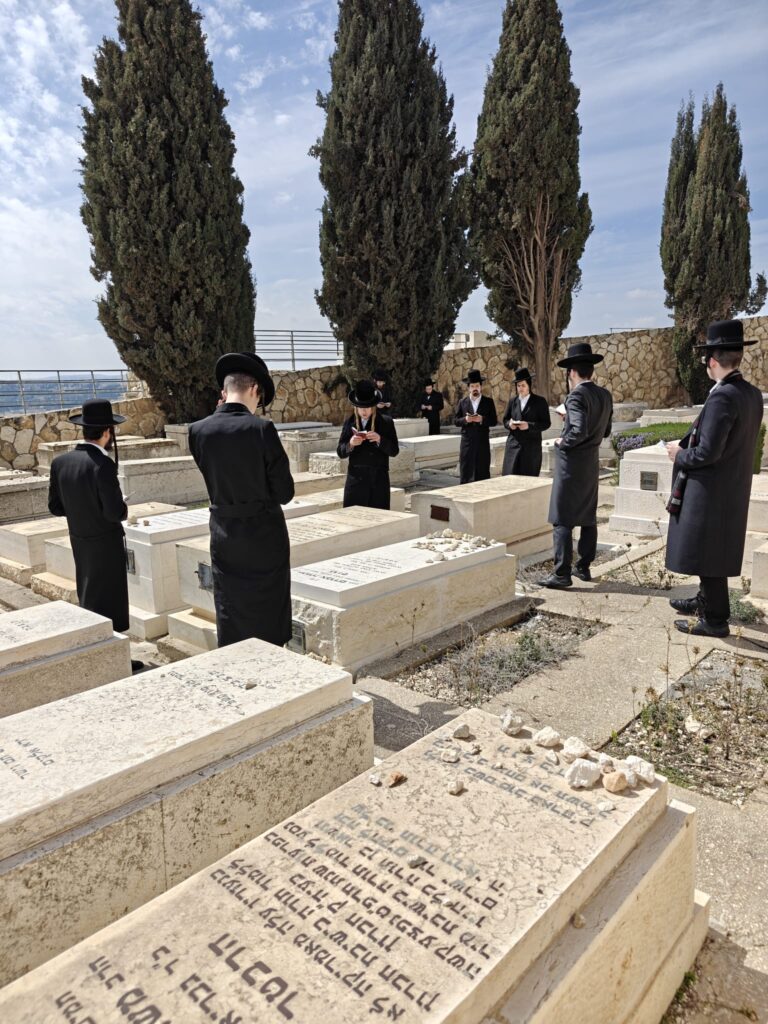
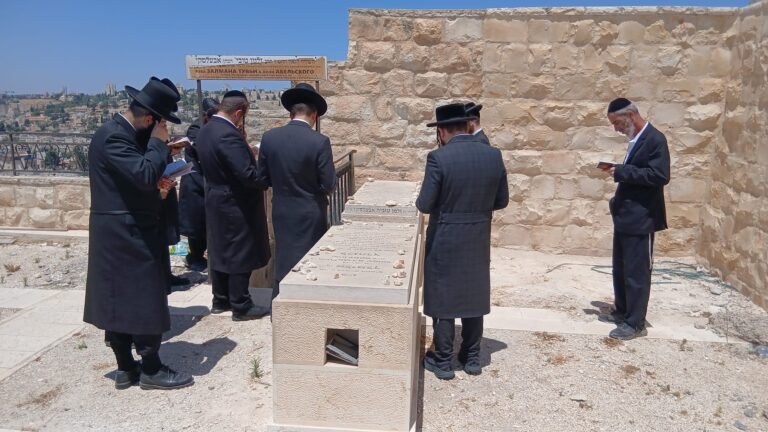
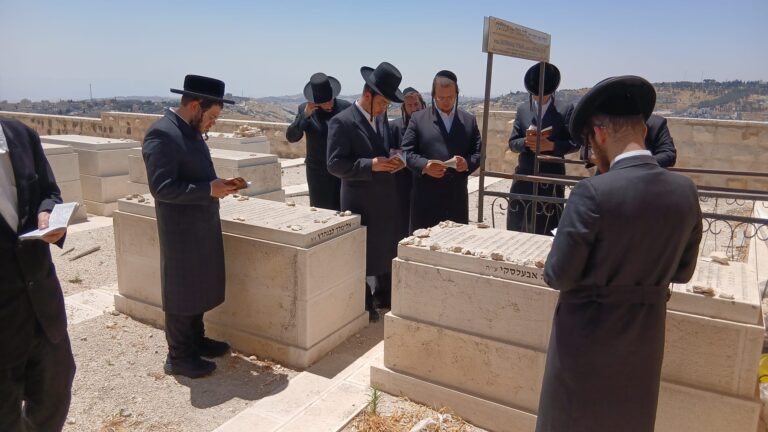
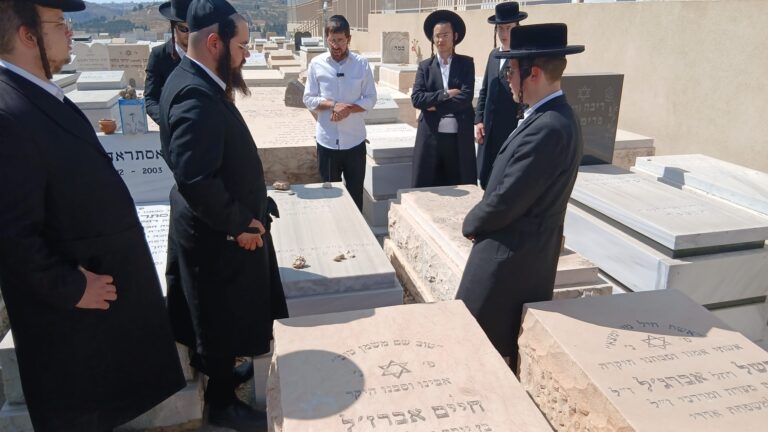
If you live abroad and cannot be in Jerusalem, our team of yeshiva students can be there for you: a full minyan at the grave, Tehillim by the letters of the name, Kaddish and El Malei Rachamim, with photos and video sent to you on WhatsApp. See our services or message us on WhatsApp to arrange a visit.