Visiting a Jewish Grave: Customs and Etiquette at the Kever
Visiting the grave of a parent, grandparent or tzaddik is a practice with deep roots in Jewish tradition. Our Sages describe Calev ben Yefuneh praying at the graves of the Avot in Chevron, and Jews have gone to pray at the kevarim of their families and of righteous people ever since. Alongside the visit, a set of customs developed to ensure that the honor of the dead is preserved. Here is a practical overview.
Why We Visit
At the grave we remember the person, say Tehillim and Kaddish for the elevation of their soul, and pray to Hashem. The prayers are directed to Hashem alone; the merit of the departed, and of the place, is invoked so that our prayers are received. A visit also expresses hakarat hatov — gratitude — to those who raised and taught us.
The Bracha on Seeing Graves
One who sees Jewish graves after not having seen them for thirty days recites the blessing Baruch… asher yatzar etchem badin, which speaks of Hashem Who created, sustains and will return life to the dead. The text appears in most siddurim.
Customs at the Grave
- Do not step on graves. Walk on the paths between them; in crowded sections like those on Har HaMenuchot, take particular care.
- Tzitzit tucked in. Within four amot of a grave, tzitzit are covered and tefillin are not worn, so as not to “mock the poor” (lo’eg larash) — the dead can no longer perform mitzvot.
- No eating or drinking in the immediate area of the graves.
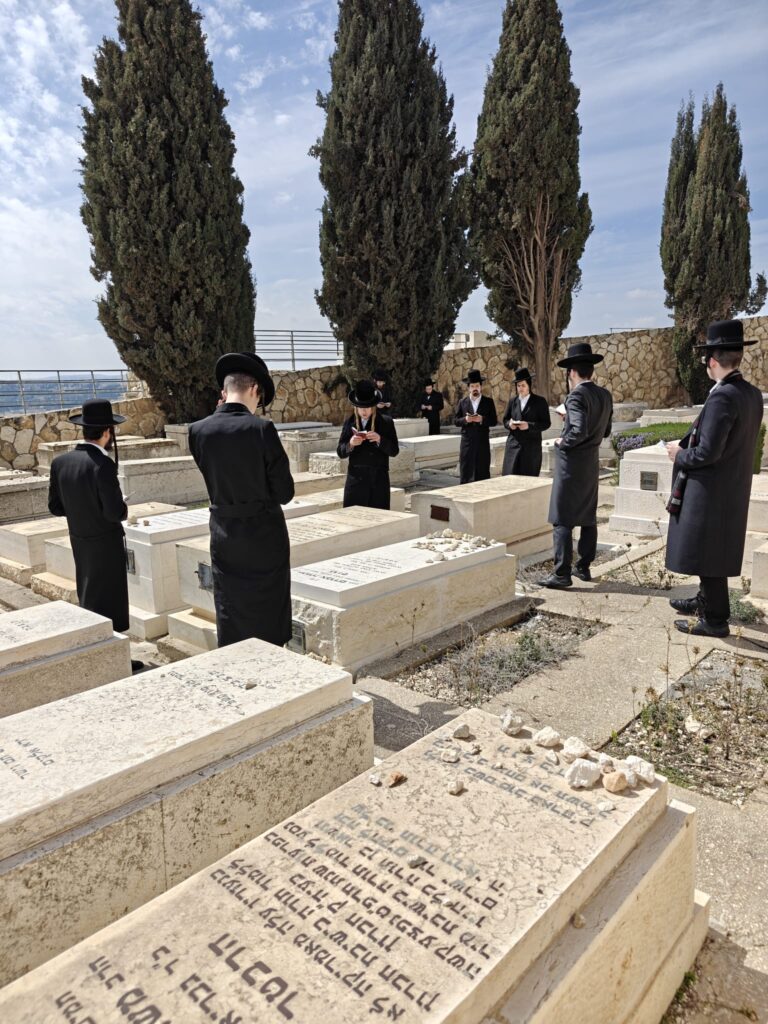
- Placing a stone. Many place a small stone on the matzeiva as a sign of the visit and a mark of honor that, unlike flowers, does not fade.
- Lighting a candle. Many light a memorial candle at the grave, especially on the yahrzeit.
- Kohanim do not enter the cemetery; many cemeteries have marked paths or areas where Kohanim may stand.
What to Say
There is no single required text, but a common order is:
- Chapters of Tehillim
- Psalm 119 by the letters of the name and the word neshama (Tehillim by Name tool)
- Kaddish, if there is a minyan
- El Malei Rachamim
- A personal tefillah in your own words
Days When Visits Are Avoided
Many have the custom not to visit graves on Shabbat and Yom Tov, Chol HaMoed, Rosh Chodesh, Chanukah, Purim and most of the month of Nisan, unless it is a yahrzeit or another special need. On the other hand, there is a widespread custom to visit the graves of parents and tzaddikim during Elul, on Erev Rosh Hashana and on Erev Yom Kippur. Customs differ between communities, so ask your rav.
Leaving the Cemetery
It is customary to wash the hands when leaving a cemetery, pouring water over each hand, often three times alternately, and many do not dry them with a towel. Some have the custom not to enter a home before washing. Many also have the custom not to visit the same grave twice in one day.
When You Cannot Come in Person
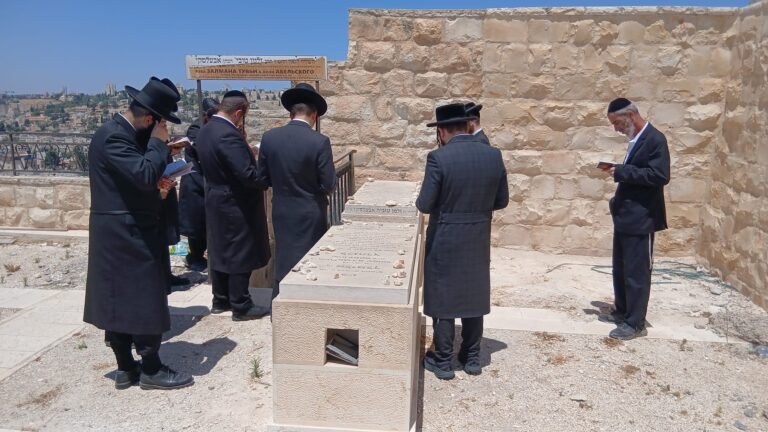
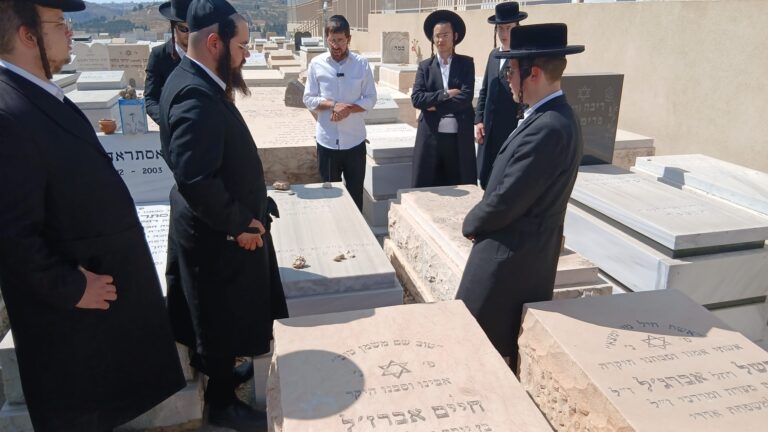
For families abroad, visiting a grave in Jerusalem may be possible only once in several years. In between, a minyan can go on your behalf, follow these customs at the kever, and send you photos and video. See what happens on our visits.
Arrange a Minyan at the Grave
If you live abroad and cannot be in Jerusalem, our team of yeshiva students can be there for you: a full minyan at the grave, Tehillim by the letters of the name, Kaddish and El Malei Rachamim, with photos and video sent to you on WhatsApp. See our services or message us on WhatsApp to arrange a visit.